Jun 26, 2026
Oct 14, 2026
Products
THK Products Provide Long-Lasting Support for a Visually Appealing Robotic Leg Prosthesis That Improves Quality of Life with Natural Movement
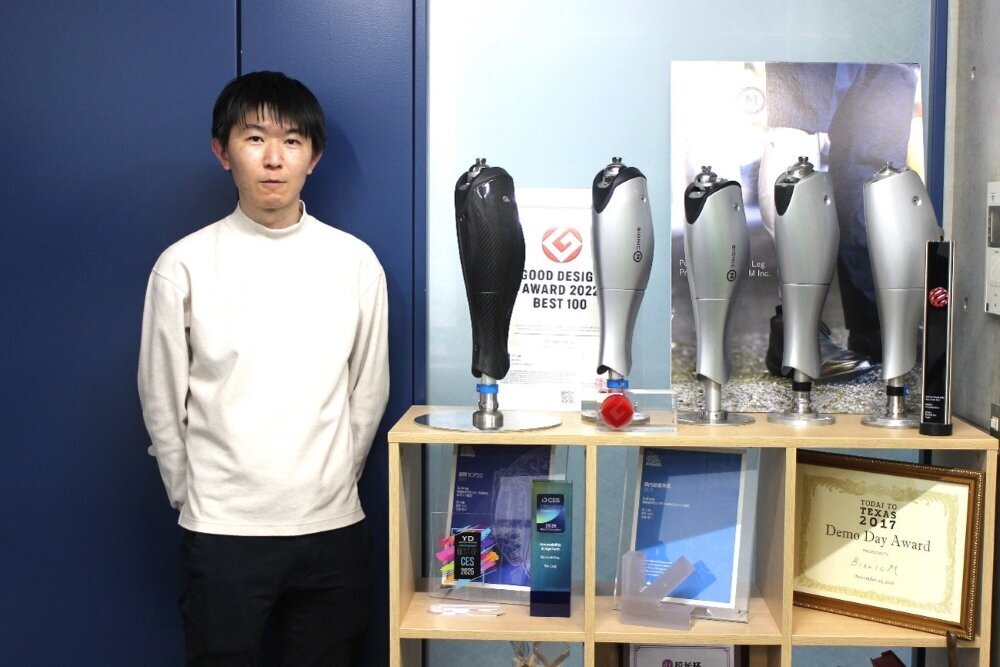
Kaneishi and various robotic leg prostheses (displayed in order from the newest model on the left to the oldest on the right)
Medical devices such as surgical robots that save patients’ lives require the highest caliber of safety and operational accuracy. For medical and assistive equipment used on a more daily basis, such as prostheses that improve quality of life for people with a lower-limb amputation, it is crucial that patients are able to trust the device. THK’s linear guide mechanisms and other products have been widely adopted as components used in medical devices, bolstering their performance and reliability. For this article, we spoke with Daisuke Kaneishi, Chief Technology Officer of BionicM Inc., which develops and sells robotic leg prostheses.
Aiming for a Naturally Moving Robotic Leg Prosthesis as a Controls Engineer
Upon matriculating at Waseda University, which is known for its bipedal (humanoid) robotics, Daisuke Kaneishi joined a laboratory focused on medical and assistive robotics as part of a project working on wearable robotics that control tremors. While at university, he was selected to participate in the Vulcanus in Europe training program at a European company through the EU-Japan Centre for Industrial Cooperation. After spending about one year as an intern at Continental Automotive GmbH in Germany, he joined a Ph.D. program at the University of California, Berkeley (UC Berkeley) to research controls for wearable robotics.
From his interest in the correlation between humans and robots, his experience researching interactions between the two through the medium of wearable robotics, and his perspective as a controls engineer, Kaneishi gained a desire to develop control technology for wearable robotics that could achieve more natural movements as desired by the wearer and to put that technology to practical use. As his doctoral research at UC Berkeley was coming to a close, forcing him to find another avenue to conduct new R&D, he heard a rumor that Sun Xiaojun (current CEO of BionicM), who studied robotic prostheses for his Ph.D. work at Tokyo University’s JSK (Jouhou System Kougaku Laboratory), was starting his own company focused on similar research. Sun, who is a lower-limb amputee himself, was aiming to make wearable robotic prostheses more accessible to society. That work struck a chord with Kaneishi, and he went to meet with him. That is how Kaneishi ended up joining Sun’s startup, BionicM, as a controls engineer in 2019. Four years later, he was promoted all the way to CTO.
With the mission of “Powering Mobility for All,” BionicM is tackling the challenge of providing people with the basic mobility to move freely on their own legs. The robotic leg prosthesis (Powered Knee Joint) they have developed utilizes THK products. Below, Kaneishi shares how this robotic leg prosthesis technology and THK product technology solve difficulties that prosthesis users face and provide what they need.
Boosting Practical Performance with Advanced Controls and Components
The all-important impetus behind making robotic leg prostheses practical for everyday use is to help improve the quality of life for users around the world who have had lower-limb amputations. Conventional prostheses employ a variety of technologies. Mechanical prostheses use physical mechanisms such as friction and springs, pneumatic ones leverage the compression resistance of air within air cylinders, and hydraulic ones utilize the viscous resistance of oil. Because such prostheses only provide passive assistance, when users stand up from a seated position, they have to stand up using only their non-amputated leg.
In comparison, BionicM's robotic leg prosthesis is equipped with a motor and sensors that can sense and identify different movements, such as sitting, standing, and walking. The motor actively provides appropriate assistance at the correct timing for the type of motion identified by the sensors. As a result, users are able to make use of that assistance from the robotic leg prosthesis when standing up.
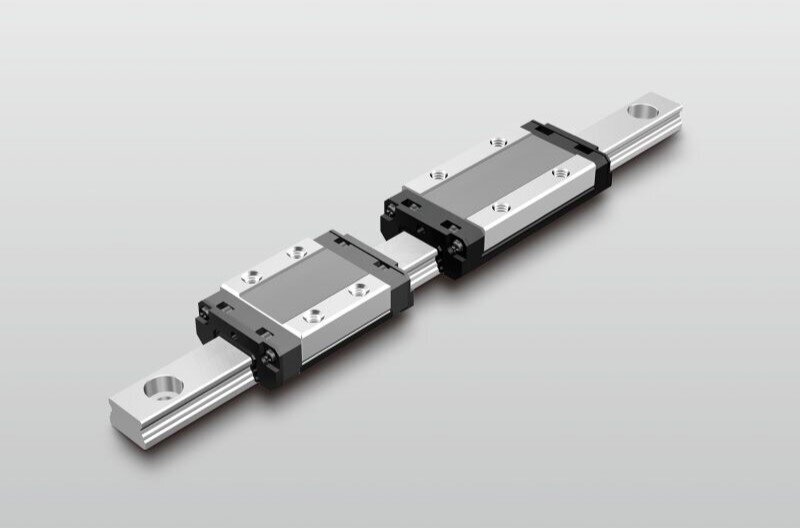
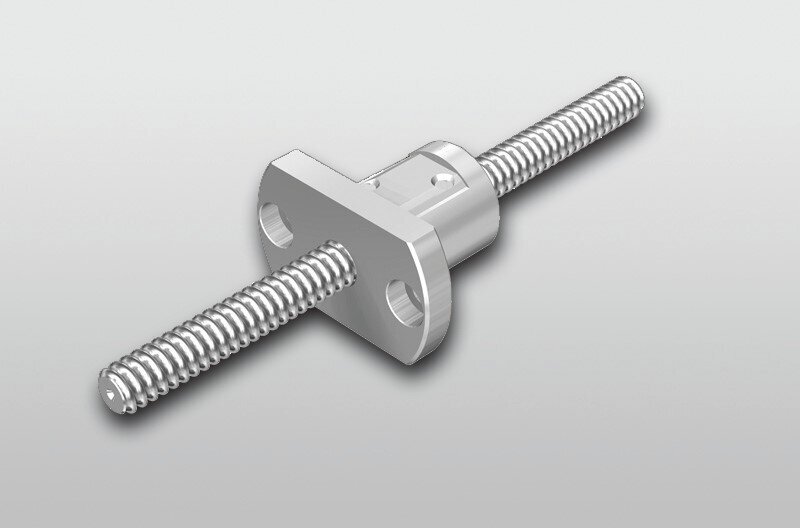
Inside the BionicM robotic leg prosthesis are a number of machine components, including a ball screw. The ball screw converts the rotary motion of the motor into linear motion, and the LM Guide transmits that linear motion to the knee joint axis. Controlling the bending of the knee joint in this way assists the user as they move. The key components of this mechanism are the ball screw and LM Guide, which support very high loads (the full weight of a human body). However, when I first joined BionicM, the control technology and machine components used for our prototype (Version 1) were not sufficient to meet the practical performance required to operate safely and last three years of active use. Version 1 used a ball screw and linear motion device that were available on the market, but the ball screw's balls would get jammed in the track, locking up the mechanism and creating a fall risk for the user. Prosthetic legs are a medical device that users wear constantly, so making sure they are safe is of the utmost importance for users to be able to rely on the product.
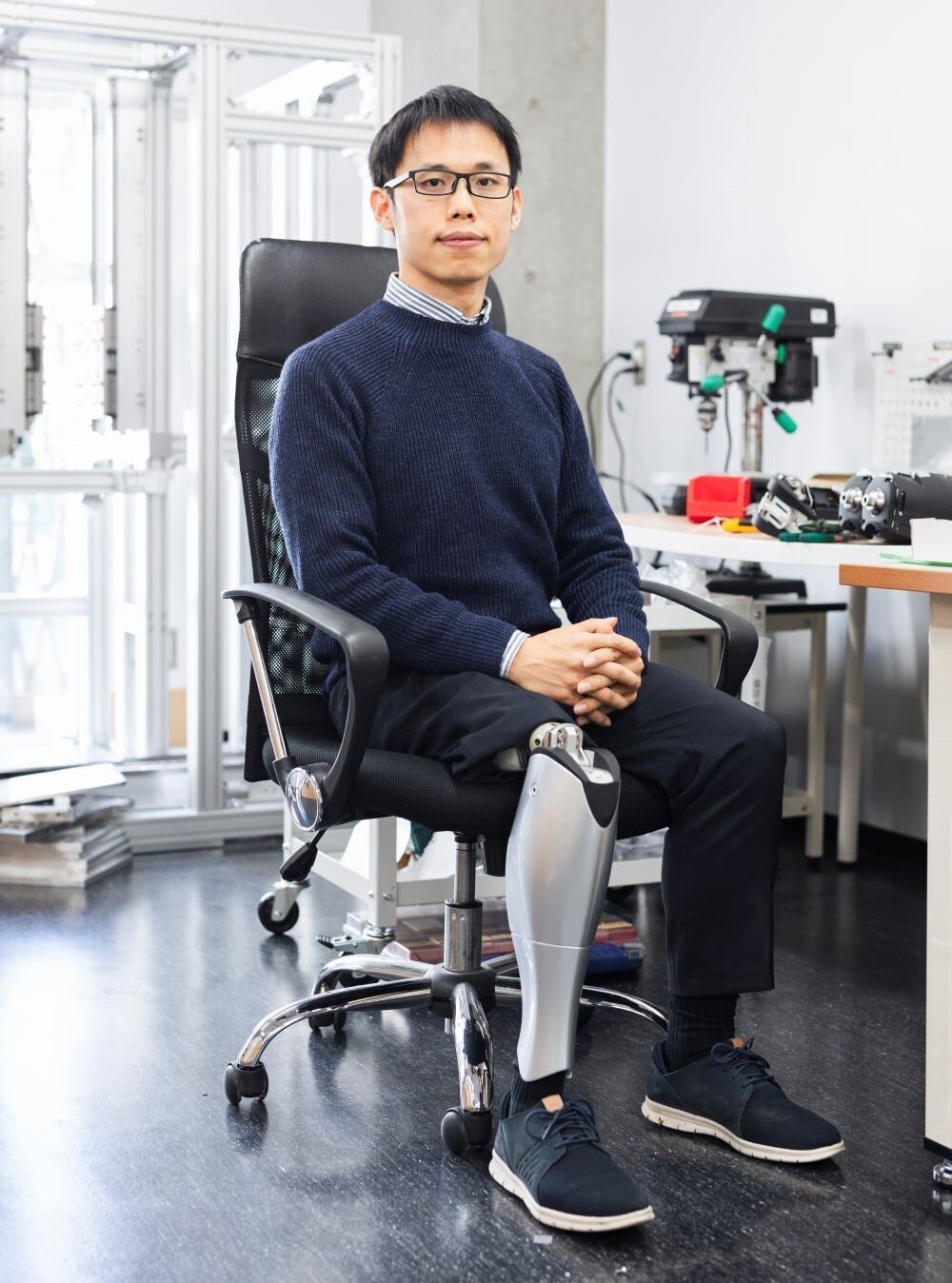
In light of these mechanical problems, we began working with THK on adjusting and improving the ball screw and LM Guide. Unlike robots that are going to be used in a controlled environment like a factory, robotic leg prostheses are devices that users will employ in their everyday lives, so they won’t just be used in one way. For example, when a user puts all their weight on the prosthetic leg as they're going down stairs, that prosthesis is going to experience a heavy load while at an angle (when the lower leg is bent forward). Even in that kind of situation, the ball screw inside the prosthetic leg has to function normally and be able to bend the knee smoothly. To develop Version 2, we searched for a manufacturer who could satisfy this kind of difficult requirement. Based on Sun’s past experience working in a research lab that had used THK products, we knew that THK was a reliable company and decided to reach out. As we went through several prototypes with THK, we reduced the diameter of the balls used in the ball screw and instead increased their quantity to solve the aforementioned heavy load problem. We also optimized the clearance between the balls and the threaded grooves (between the screw shaft and the nut) to prevent the balls from jamming up and causing the ball screw to lock in place. Fine-tuning this clearance also helped reduce backlash that leads to gaps and slow positioning. The durability of THK's ball screw and LM Guide have also been thoroughly vetted. The prosthetic leg equipped with THK's products has cleared the durability testing that we designed and executed, and we confirmed it lasts for the three million steps that a person without a disability takes each year. Thanks to the improvements made upon THK’s ball screw and LM Guide, we have made significantly more progress towards commercialization and achieving natural movement for our robotic leg prosthesis.
A Visually Appealing Robotic Leg Prosthesis
From the start of development, we appointed a designer to make BionicM's robotic leg prosthesis visually appealing. In 2020, our Version 1 received the highest Luminary recognition in the design concept category for the Red Dot Design Award, one of the top three design awards in the world. Version 4 was awarded GOOD DESIGN AWARD BEST 100 in 2022, and later in 2025, Version 5 was recognized with the top prize, Best of Innovation, in the Accessibility & AgeTech category at CES 2025, the world's largest technology expo held in Las Vegas, USA.
While conventional prostheses have given off the impression of using a foam cover to hide an amalgamation of thin metal pipes connected to modular parts, we wanted our robotic leg prosthesis to have a visually appealing design that wearers would be proud to show off, with a shape and volume that mimic the calf, Achilles’ tendon, and other parts of a leg. In addition to creating a natural silhouette even when the user is wearing long pants, the three-dimensional curves of this design project a more dynamic, artistic image whether the user is standing or in motion.
This attention to detail was certainly one factor in the high praise our product has received. More specifically, though, I believe the recognition is for the message Sun is sending through the design. In the same way that glasses went from being simply a tool for correcting vision to a way people can show off their style, we want prosthetic limbs to evolve from “medical device” to “fashion”—not merely to help people who are missing a leg to walk, but to allow them to express themselves as well.
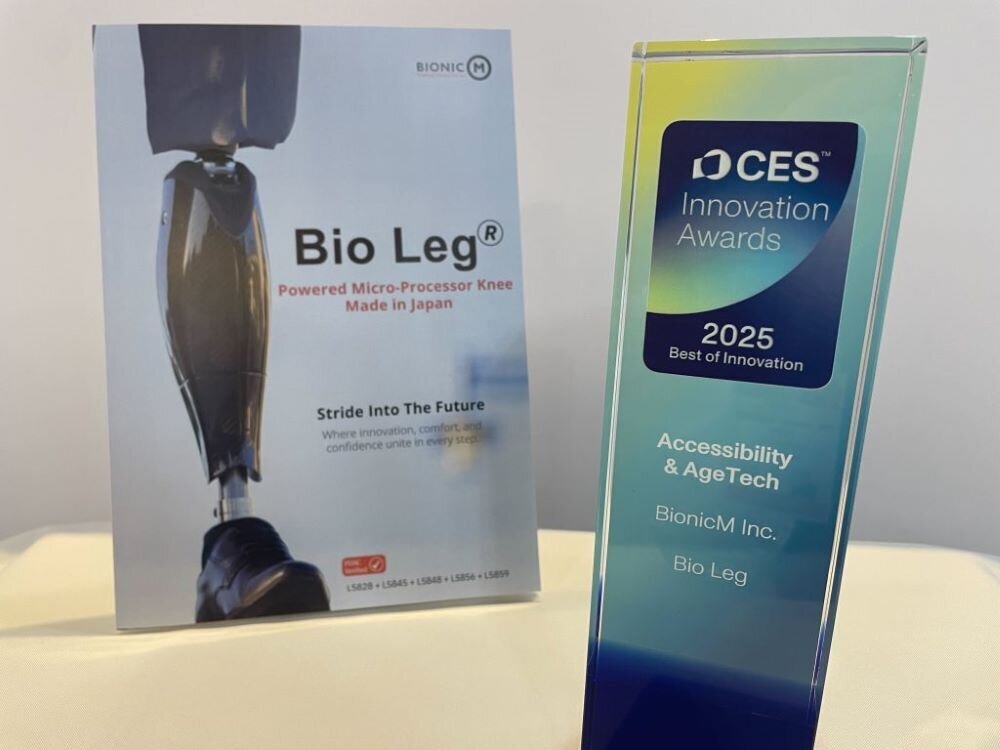
Image courtesy of BionicM (BionicM Announces Launch of U.S. Headquarters and Unveils Bio Leg®, Awarded CES 2025 Best of Innovation) (Available in Japanese only.)
Future Developments
At BionicM, we want to grow our sales in our primary US market, where the robotic leg prosthesis is covered by health insurance, and then expand our market throughout Europe, Japan, and Asia so we can improve the quality of life for users around the globe.
In the meantime, we're listening to feedback from our users to continuously refine the technology of our robotic leg prosthesis. For example, users have requested for the prosthesis to be made waterproof (rated for everyday use) to keep it from malfunctioning when water gets inside, and they’ve also asked for the motor actuator to make less noise. Even though our current robotic leg prosthesis weighs the same as a real leg (3 kg including the battery), some users who are accustomed to lightweight conventional prostheses have also mentioned the prosthesis is still heavy to lift, and they want it to be smaller and weigh less. The controls (software) used for our robotic leg prosthesis have earned it praise for not feeling too heavy during use because of the way they facilitate smooth, natural motion, but we will continue working with THK to improve our technology and develop a next-generation version that answers the call for quiet, lightweight, and water-resistant hardware.
Concluding the Interview
With regard to what Kaneishi expects from THK as BionicM works to expand its market and develop its technology, he commented, “The parts THK provides to support the functionality of the robotic leg prosthesis continue to be as durable and reliable as ever. We also feel reassured when we know that we can expect a stable supply of components that won’t be impacted by geopolitical risks. Additionally, THK has worked with us to help keep the cost down as we try to expand the use of our robotic leg prosthesis.” Noting that BionicM is also considering using the technology it has developed to expand into humanoid robots in addition to robotic prosthetics, Kaneishi expressed his desire to continue working together with THK. “THK provides us with highly reliable components, so when that time comes, I hope we can keep collaborating on development and receiving technical support.”
* This content is based on information that was released in Japanese on June 26, 2026.