Jul 29, 2026
Products
AI Wins Against Professional Table Tennis Player! THK's High-Speed, High-Precision Technology Supports Sony AI's Table Tennis Robot "Ace"
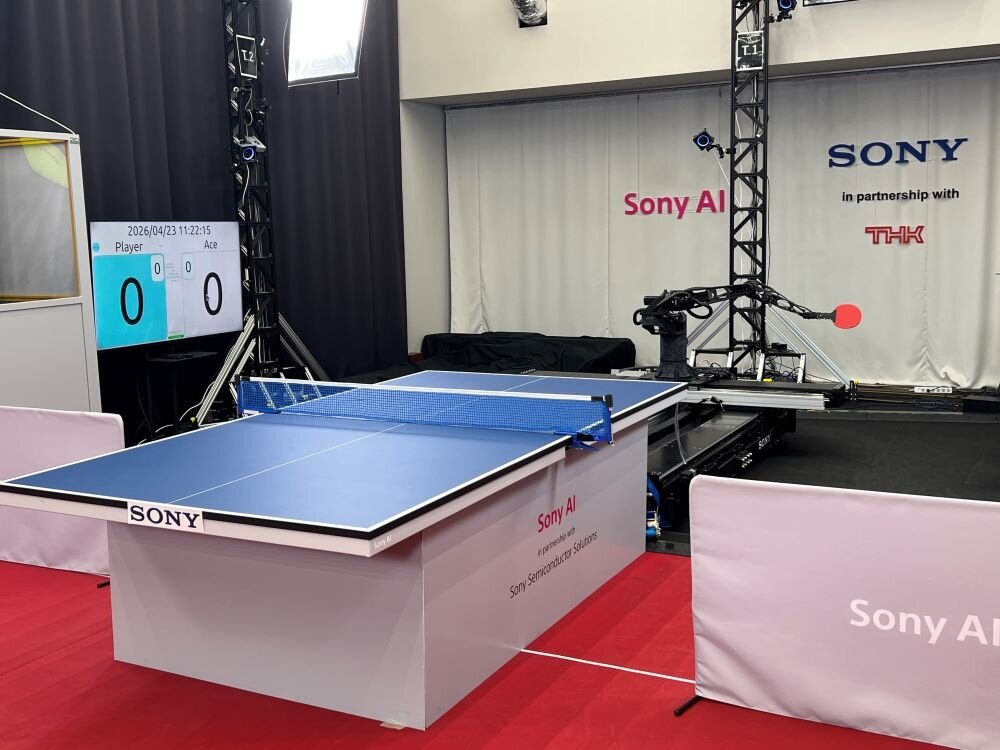
In the world of AI, it is no longer astonishing to see professional chess and shogi players outmatched by an AI system that has acquired the techniques, tactics, and strategies of human players through machine learning. In fact, these games have been used as benchmarks to compare the abilities of AI and humans. However, conventional wisdom has long held that AI can’t keep up with humans in the realm of physical games and sports, which require complex interactions with real-world physics in a three-dimensional environment.
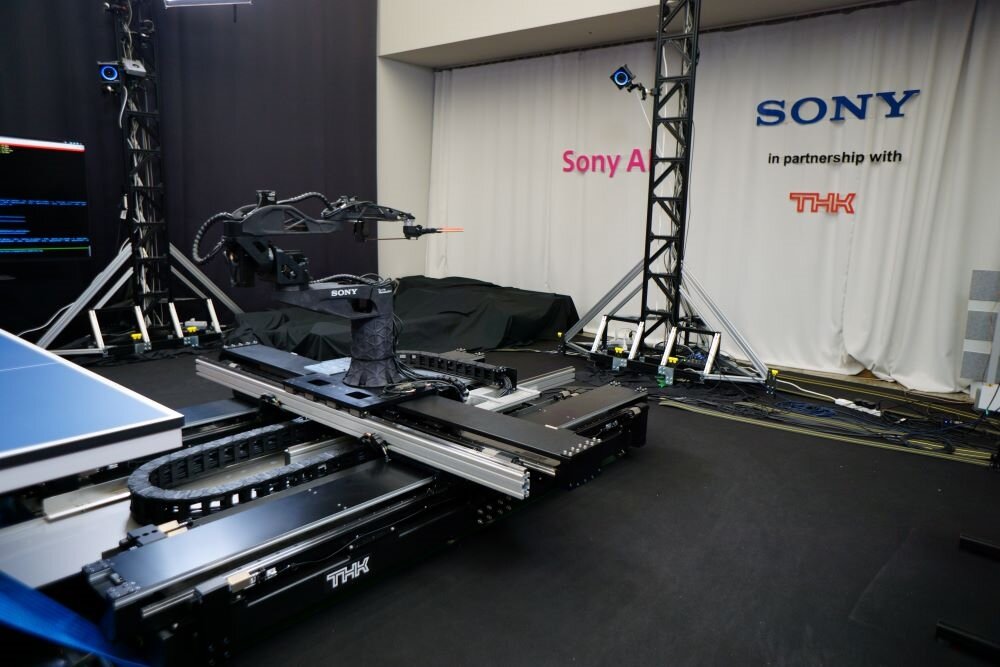
To address these challenges, Sony AI, a division of Sony Research, launched Project Ace. THK provided a Linear Motor XY Axis Unit to this project, contributing to the victories of Sony AI's table tennis robot (AI agent) over top-ranked human athletes.
This article will introduce Project Ace and its objectives, discuss the groundbreaking results of matches against leading table tennis players, and explain the features and strengths of THK's Linear Motor XY Axis Unit that supports the high-speed movement and positioning accuracy of the autonomous robot system Ace.
What Is Sony AI's Project Ace?
Project Ace undertakes research and development for Ace, an advanced autonomous robot system capable of defeating professional table tennis players by applying AI systems to real-world athletic competition. The development of Ace was led by Peter Dürr, Director and Project Leader of Sony AI in Zurich. In 2022, Dürr participated in the research on Gran Turismo Sophy, an autonomous driving AI for a virtual racing game. Ace builds on that work, bringing it into the realm of the real world. The aim of this research is not only to play table tennis, but also to deepen our understanding of how robots can perceive, plan, and act in dynamic environments when competing against agile and precise human opponents.
The Three Technological Foundations of Project Ace
The ability of the autonomous robot system Ace to defeat top-class table tennis players relies on three essential technologies: (1) Sony's proprietary advanced sensor technology (perception), (2) deep reinforcement learning (simulation and control), and (3) precision robot hardware. "Not only were the individual technologies important, but how they were integrated was crucial," says Peter Dürr, Ace Project Leader at Sony AI.
The advanced sensor technology comprises nine RGB cameras and three event-based vision sensors (EVS) which track the ball's position and rotation in three-dimensional space with high resolution and speed. Reducing the latency of the perception system directly improves timing accuracy and the rate of success in high-speed rallies.
Also, since it would be impossible for humans to manually program the control system, Sony AI developed a unique deep reinforcement learning method with integrated optimal control. The simulation environment was created through a combination of manual programming and supervised learning, while the control system learned how to play using reinforcement learning. High-speed response is crucial to allow the system to react in real time to balls hit by professional players at speeds exceeding 20 m/s. Performance improvements were achieved through enhanced simulation environments and optimized reward design that encouraged faster hitting.
In addition, precision robotic hardware plays a vital role in reducing the overall system response time to less than 20 milliseconds. Mechanical responsiveness, rigidity, and precision all support the control bandwidth required for high-speed table tennis rallies.
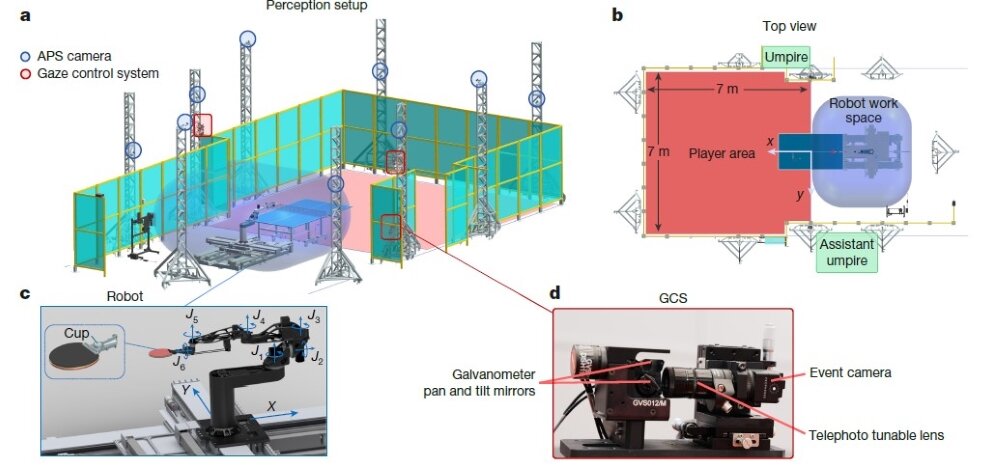
a: Nine APS cameras and three GCS (Gaze Control Systems) are installed on towers, monitoring the entirety of the Olympic-sized court from outside the play area.
b: Players can fully utilize their half of the court but are instructed not to enter the robot's side of the court for safety reasons. Two certified referees officiate the match from either side of the table.
c: The robot's hardware consists of two prismatic joints, six revolute joints, and an end effector with a racket and a cup to hold the ball for one-handed serves.
d: Each GCS consists of an event camera, a telephoto tunable lens, and galvanometer pan and tilt mirrors.
THK's Linear Motor XY Axis Unit Aided in the Development of the Robot Hardware
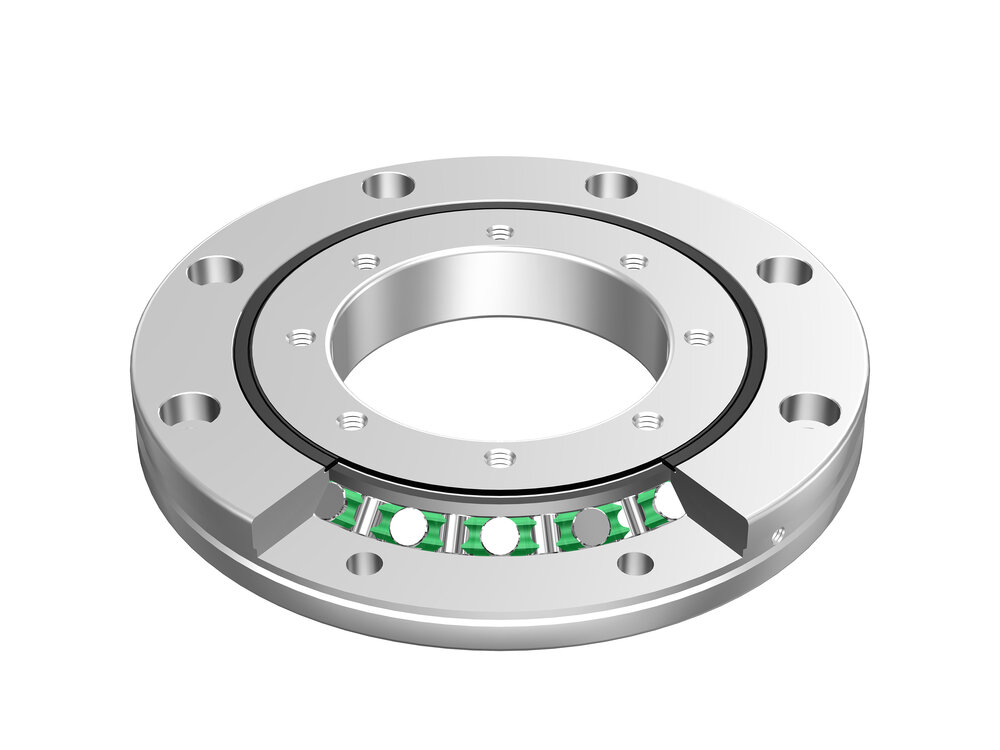
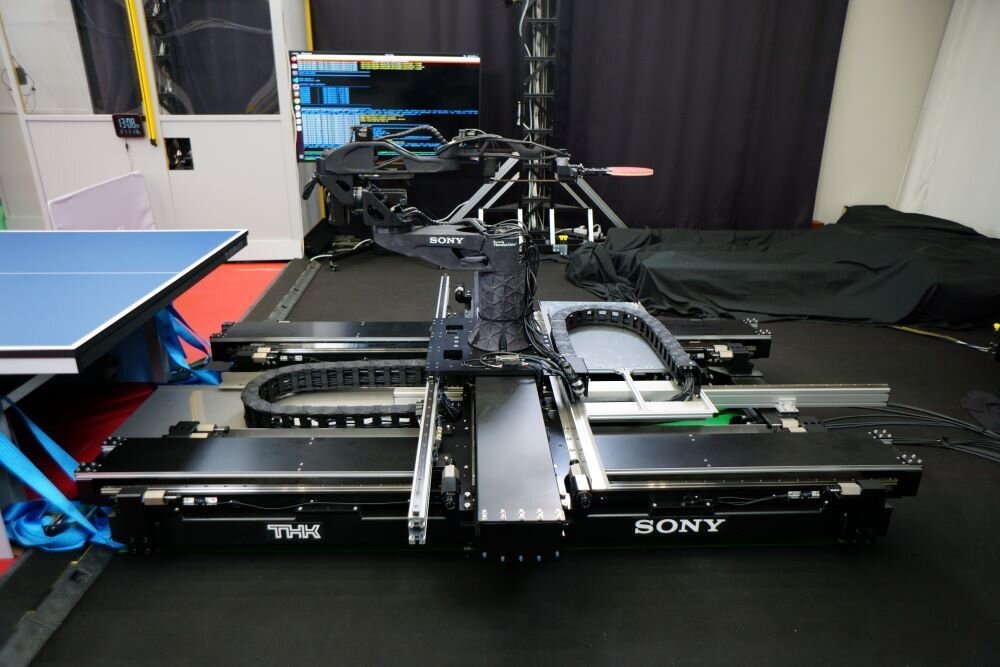
According to Nobuhiko Mukai, a Staff Robotics Engineer at Sony AI in Tokyo, the autonomous robot Ace is equipped with a Sony-developed 6-axis robot that uses THK's Cross-Roller Ring Model RU and THK's Linear Motor XY Axis Unit, a high-speed, high-precision positioning system that combines a linear motor drive and the Caged Ball LM Guide Model SHS. These elements enable the robot to swing a racket at a maximum speed of 20 m/s, a specification determined by measuring match data from professional players and accounting for the performance required for a 0.8-second racket swing.
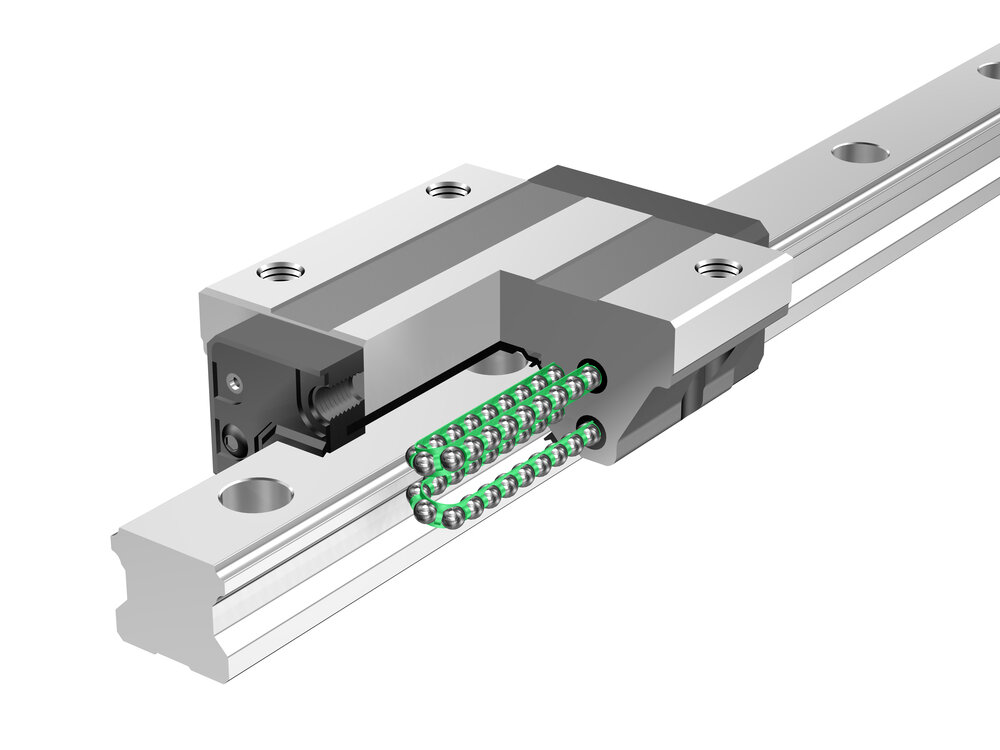
Initially, Sony AI experimented with commercially available robots (such as a 6-axis robot) and belt-driven linear stages. However, these lacked the acceleration necessary for competing against professional players and failed to achieve the required performance in terms of load capacity and tracking delay. This ultimately led to the team deciding to design and construct their own robot. For this in-house development, Sony focused on THK actuators, which they have used for over 20 years in applications such as inspection equipment. For the proprietary 6-axis robot that holds the racket, they decided to adopt a THK Linear Motor XY Axis Unit as the XY stage, enabling high-speed and high-precision movement in the horizontal plane.
However, before they would be able to face off against a professional table tennis player, several challenges remained with the autonomous robot's XY stage.
One of these was a rigidity issue with the first Linear Motor XY Axis Unit (prototype 1). Vibrations in the movable platform during high-speed operation prompted Sony AI to make modifications such as increasing the number of LM Guide axes from two to three.
The design for the second unit ordered from THK provided 3 times the thrust and 1.5 times the acceleration, resulting in performance improvements that were decisive in overcoming top-class table tennis players.
Capable of moving the entire 40 kg robot at high speed with precision finer than 100 μm, the XY stage serves as a high-performance foundation that significantly contributes to the performance of the system overall. To push its performance beyond the official acceleration specification of 2 G, Sony AI further fine-tuned the XY stage by reducing the maximum speed and increasing the acceleration on the Y-axis to 2.5 G.
Results and Technological Improvements from Ace's Research and Development
A paper presenting the research results was published in the international weekly journal of science Nature (Issue 8110) on April 23, 2026, providing analysis and evaluation of matches conducted in April 2025. Ace played best-of-three matches against five elite players with over 10 years of table tennis experience and competed in best-of-five matches with two professional players active in Japan's T.League.
The matches followed the rules of the International Table Tennis Federation (ITTF), reproducing typical competition conditions such as free racket selection and an Olympic-sized court (7 m × 7 m × 5 m on the player's side). One exception to the ITTF rules applied to all matches was the adoption of the "golden point rule" used in the T.League (the first player to reach 11 points wins). Two JTTA-certified referees judged points from both sides of the court to ensure strict adherence to the rules.
Ace won 3 out of 5 matches against elite players, winning a total of 7 out of 13 games. However, it lost both matches against professional players, winning only 1 out of 7 games (see “Ace versus human player” table below).
Ace consistently returned shots up to 14 m/s, achieving a maximum ball speed of 16.4 m/s and a spin speed of 600 rad/s. The maximum ball speed and spin of shots from human opponents that Ace was able to return were 19.6 m/s and 867 rad/s, respectively.
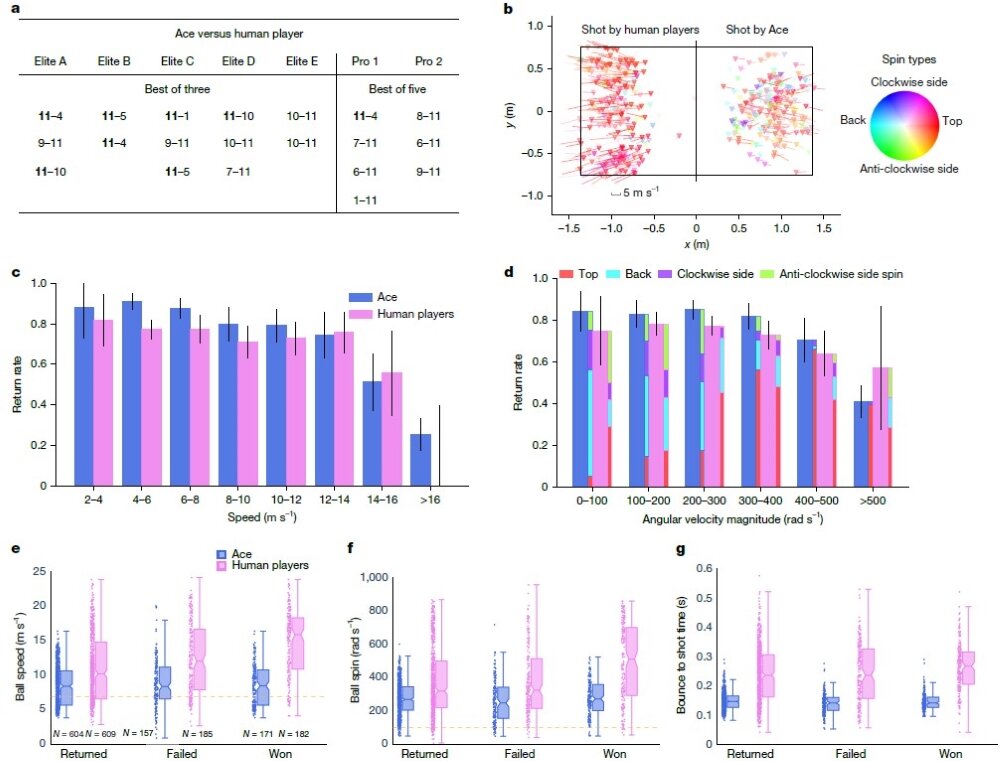
a: Score of matches
b: The post-table-bounce ball states of winning shots. The points show the bounce position. Lines from the points represent the velocity, and the color represents the spin axis.
c: Return rate of Ace and human players at different speeds (measured after being hit by the opponent)
d: Return rate of Ace and human players at different angular velocities and the direction of spin (measured after being hit by the opponent)
e: The post-shot ball speed of Ace and human players
f: The post-shot angular velocity of Ace and human players
g: Time from table bounce to racket hit
As of April 2026, approximately one year after the April 2025 matches that were the subject of the paper mentioned above, the technology has advanced dramatically. The maximum velocity of shots that Ace can respond to has increased from approximately 14 m/s to approximately 25 m/s, matching the capabilities of human players. The spin velocity of shots that Ace can return has also increased from 600 rad/s to over 800 rad/s, on par with human players.
This technological progress is due to improvements in robot hardware and deep reinforcement learning (simulation and control).
Hardware improvements include an increase in torque in Sony's 6-axis robot, achieved through augmentation of the motor (Yaskawa Electric) and gearbox (Harmonic Drive Systems), and a redesign to optimize the size of the THK cross-roller ring. These adjustments were implemented incrementally to maximize performance while preventing overheating.
Two independent enhancements were made to the software: improvements to the deep reinforcement learning through reward functions for stronger shots, and reductions in the perception system's latency. These changes enabled the system to respond more effectively to rapid environmental changes.
Peter Dürr stated, "This research is fundamental, demonstrating the robot's ability to react extremely quickly to rapid environmental changes, and is not aimed at specific industrial applications. However, this high-speed adaptive capability offers broad implications for industrial settings requiring responses to uncertainty and fluctuation (such as high-speed picking and dynamic assembly). Through the publication of our research results in Nature (Vol. 8110), we welcome the robotics community to explore applications."
THK's Customizable Unit Solutions Meet Diverse Needs
In this article, we introduced the results of research and development for Project Ace, an AI agent able to compete on equal footing with top-class athletes in the field of table tennis. We also looked at the Linear Motor XY Axis Unit that supports Ace's high-speed and high-precision operation in the physical responses and three-dimensional movement required in this competitive sport.
THK's unit solutions enable rapid, high-speed, and high-precision positioning that responds to changes in human-performed tasks, not only in the field of table tennis but also on the production floor. For customers considering automation, we can propose solutions and automation ideas tailored to the challenges of your operations. Please feel free to contact your nearest THK branch or sales office.
*This article is based on information available at the time of the interview in June 2026.
*This content is based on information that was released in Japanese on July 29, 2026.
Sources
Figures and tables: International weekly journal of science Nature (No. 8110, April 2026)
Photos: Published with permission from Sony Research Inc. and Sony AI.
Contact information
Marketing & Public Relations Department, THK CO., LTD.
E-mail: thk-sp@thk.co.jp